Journal · Northern Vietnam
A Place to Return To
A stay is often treated as the quiet space between one day and the next. In practice, its location and atmosphere decide how much of a region remains present after the road ends, and what kind of morning is possible before it begins again.
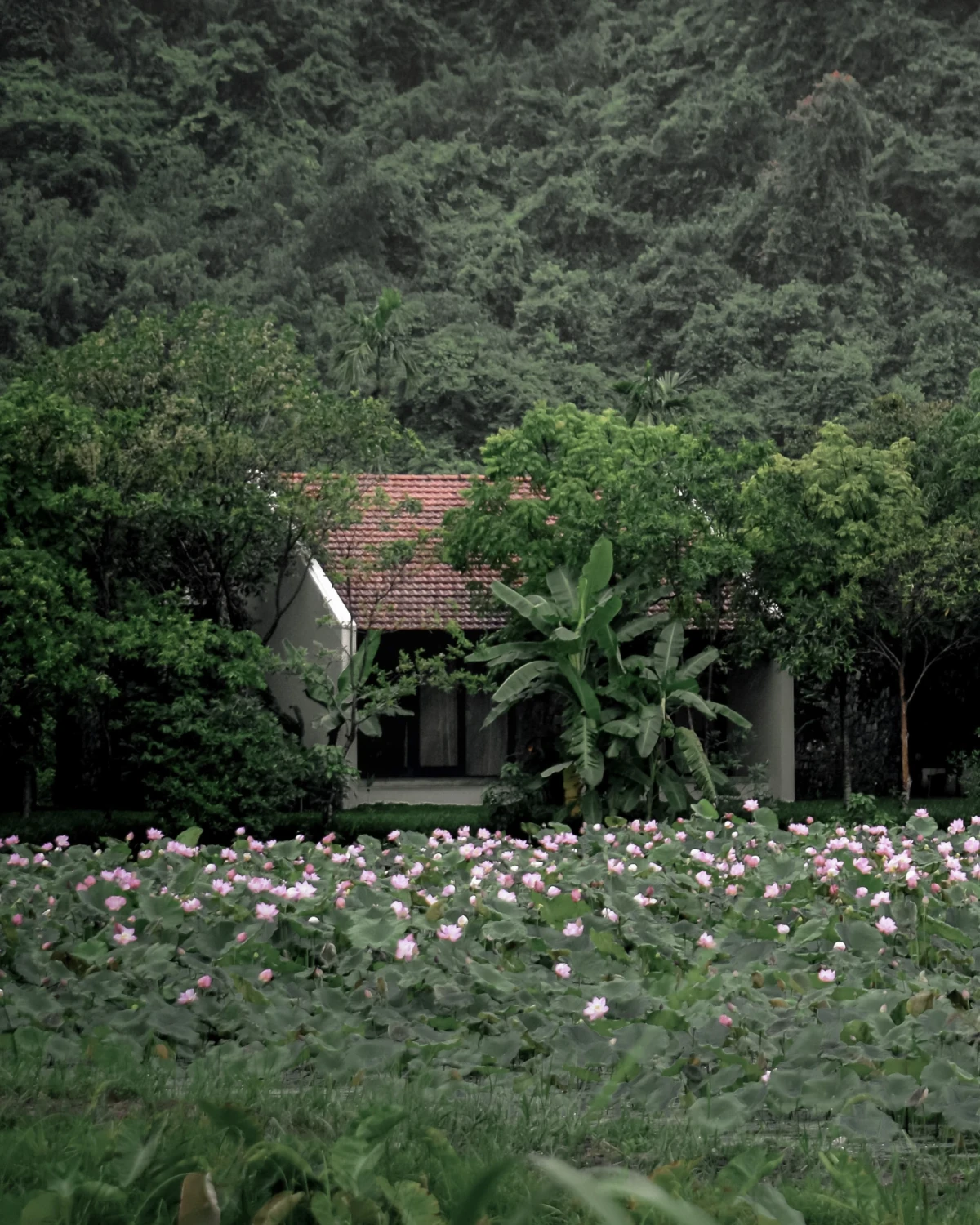
By late afternoon, a room matters for reasons that rarely appear in its description. There is somewhere to leave wet shoes, a familiar path from the vehicle and no further decision to make. Outside, the light has moved behind the ridge. The next plan can wait until morning. This is the point at which a stay stops being an entry on the itinerary and begins to shape the journey around it.
When choosing a stay in Northern Vietnam, photographs tend to lead the decision. The more useful question is where the building sits in relation to the day. A place can be modest and feel exactly right when the landscape continues at its threshold. A polished retreat can feel strangely detached when every return requires leaving the region behind.
The Hours Around the Itinerary
Some of the most telling moments happen outside the planned day. A traveller steps onto the terrace before breakfast because the valley is still quiet. Someone remains by the door after returning, listening to rain settle into the trees. No one has arranged these moments. They are possible because there is enough time, and because the surroundings have not disappeared at the edge of the property.
On roads that bend through northern valleys, the final distance often takes longer than it appears on a map. Weather changes, daylight narrows and a short detour can use the part of the afternoon that looked free. A stay at the wrong end of that detour turns every evening into another arrival. Choosing well means counting those hours before being persuaded by the room itself.
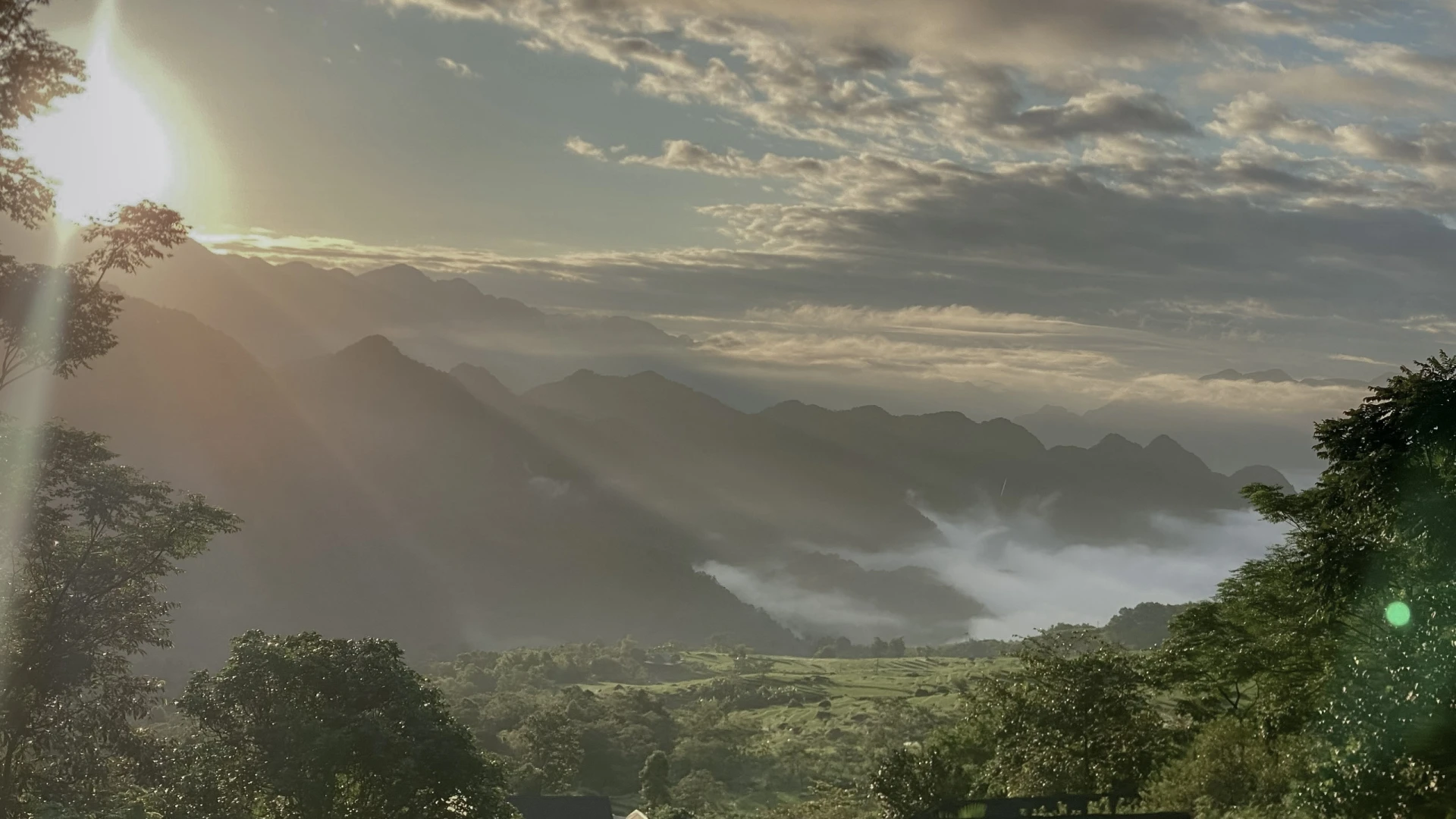
Position can also give time back. In Pu Luong, waking within the valley means seeing the mist before it lifts. Arriving later in the morning cannot recover that hour. A second morning can begin without packed bags beside the door. This is not proximity for its own sake. It is simply being there while the valley is still changing.
A Building That Belongs There
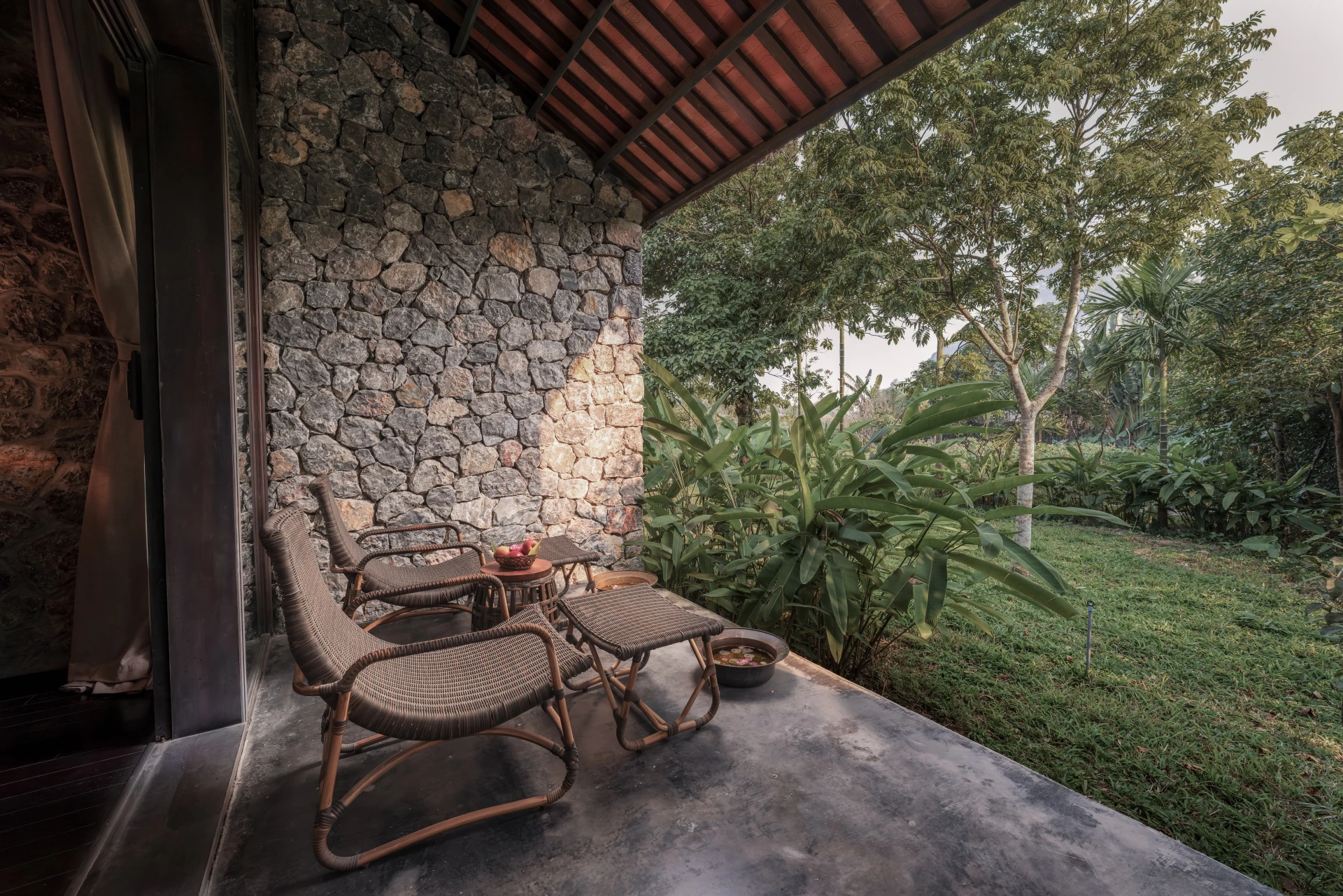
The relationship between a building and its setting is usually felt through ordinary details. A roof reaches far enough to make sitting outside comfortable in rain. Stone stays cool where a hand rests against it. A chair faces the garden rather than the camera. None of this needs to be announced as design. It simply allows the climate and the landscape to remain part of the room.
Materials alone cannot create that connection. Timber, woven fiber, and local stone can still feel theatrical when they are treated as decoration. The more convincing spaces are often quieter. Air moves through them. Light changes their character during the day. Objects sit where they are useful, not where they complete a picture. The result feels considered, but not overly arranged.
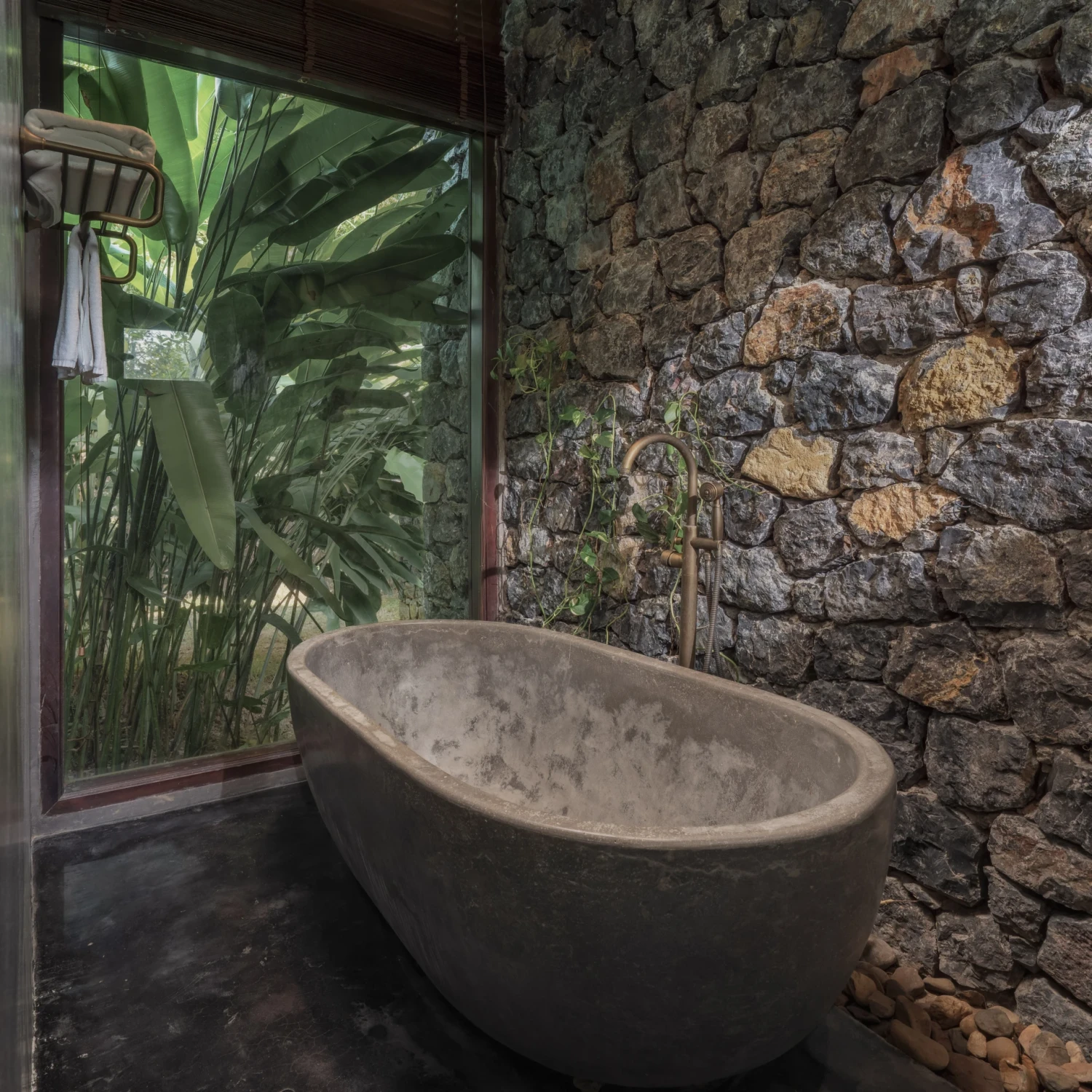
Even a private bathroom can carry the setting without turning it into a display. Leaves press close to the window. The stone darkens where water reaches it. Privacy remains, yet the room does not feel sealed away from the weather outside. What matters is not the bath as an amenity. It is the care given to the boundary between shelter and what lies just outside.
The room provides the pause.
Returning to it gives the day a shape.
The Return Changes the Day
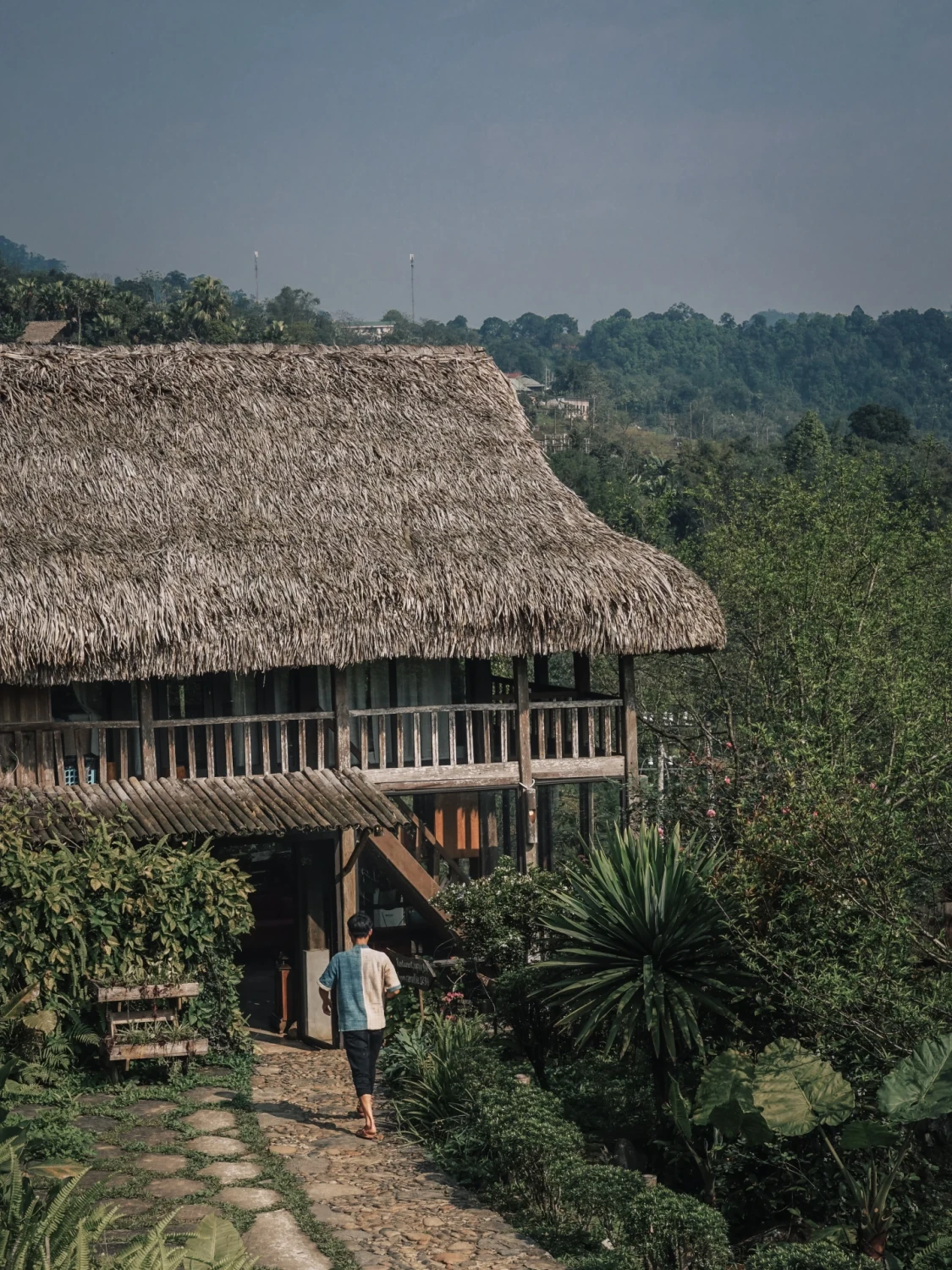
By the second evening, the final bend in the path is familiar. Travellers know where the light falls near the entrance and where shoes are left when the ground is wet. That recognition is small, but it changes the feeling of arrival. The stay is no longer an address found at the end of the road. It has become part of how the region is being remembered.
Familiarity also gives people room to travel at different speeds. One person may want silence after the drive; another may remain outside until the light is gone. A family does not have to keep moving as a single unit. A couple can spend an hour apart without the day feeling interrupted. The evening settles more naturally when nobody has to agree to one more activity simply because the hour is free.
Stays lasting only one night repeatedly ask travellers to adjust, unpack and leave again. Sometimes a route genuinely requires it. More often, the second night is where the place begins to feel inhabited rather than borrowed. There is less attention on the room and more on what surrounds it. The morning no longer begins with departure, and the evening has somewhere familiar to end.
What the Morning Gives Back
Morning is when the choice of stay becomes clearest. In the northern hills, cloud can sit below one ridge and disappear from another within an hour. A path that was busy the previous afternoon may still be empty. Beyond the garden, work has already begun. A traveller does not need an excursion to meet this part of the day. Opening the door may be enough.
Leaving later is not always possible, nor is it always the right decision. But departure should not be early simply because the itinerary has space to fill. Breakfast, weather and road conditions have their own order. Allowing them to settle can make the next movement feel considered rather than abrupt. Readiness is more than having the bags closed beside the door.
A place to return to does not have to be the grandest stay on the route. It needs to make sense where it stands and leave enough of the day intact on either side. Its value may appear in wet shoes by the entrance, an unhurried morning or the relief of recognising the path home. The memory is not of a room alone. It is of knowing where the day would end, and being glad to return.