Journal · Dìa Trên, Cao Bằng
The Life of a Sheet of Paper
In a Nùng An village in Cao Bằng, paper made from tree bark has served writing, family records and ceremonies. New uses are becoming part of its story.
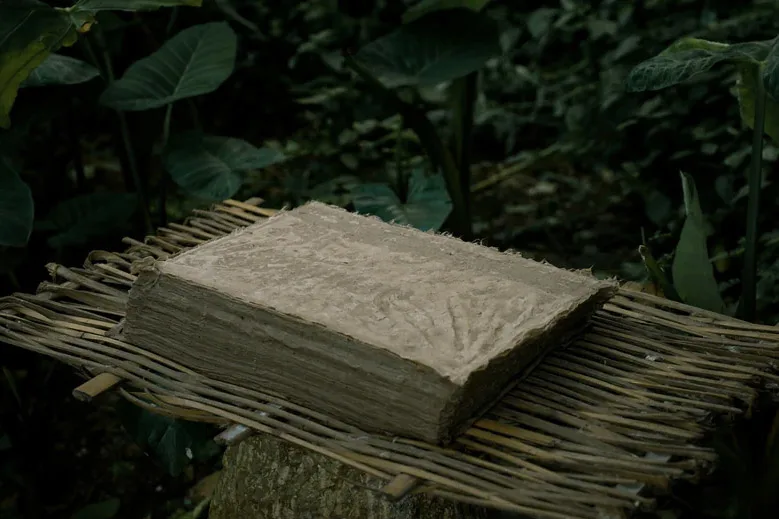
In Dìa Trên, wet sheets of paper are dried against walls and wooden surfaces. Later, the paper may carry writing, be cut for a ceremony or become a page in a notebook. Each use gives a different purpose to the work that happens at the vat.
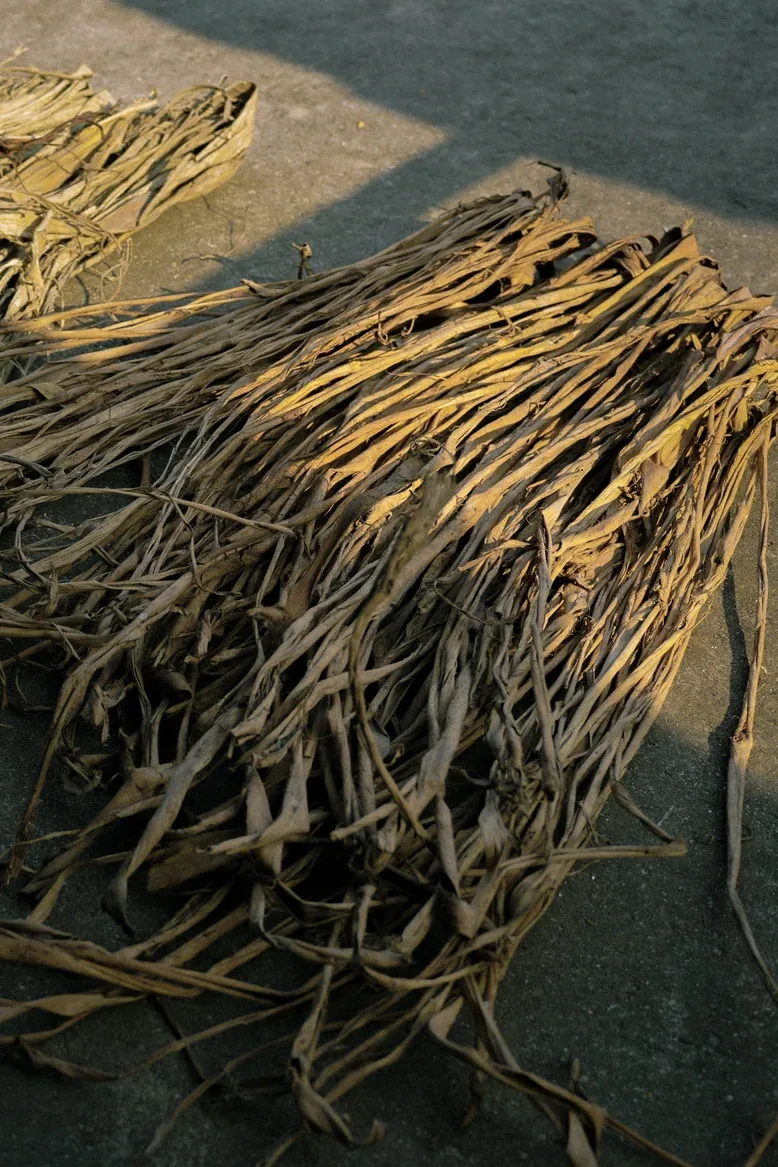
The village’s Nùng An families make giấy bản from the bark of a tree known locally as mạy sla. Following a sheet from its raw material to its intended use brings several parts of village life into view.
From Bark to Sheet
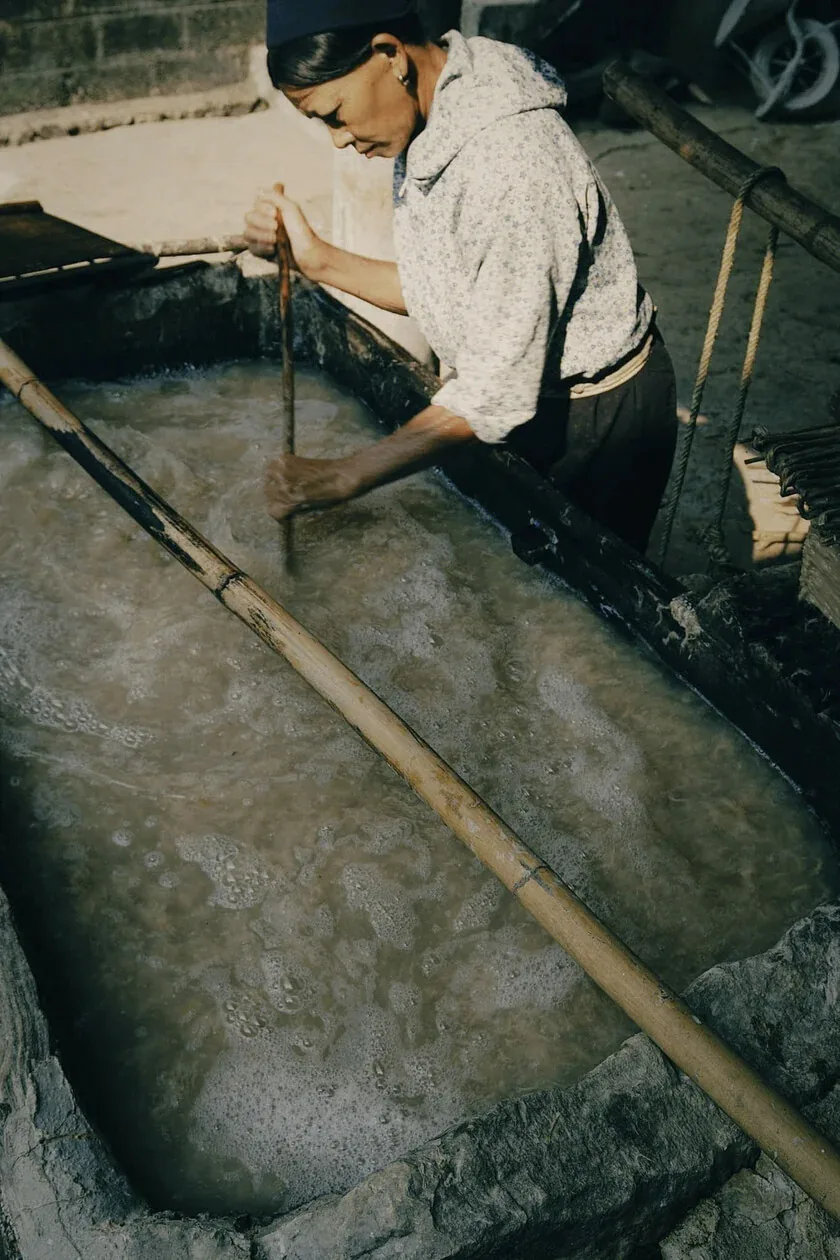
The bark is cooked, cleaned, soaked and beaten into pulp. Once dispersed in water, the fibres can be gathered onto a bamboo screen held in a wooden frame. The maker moves the frame through the vat, allowing a thin layer to settle across its surface.
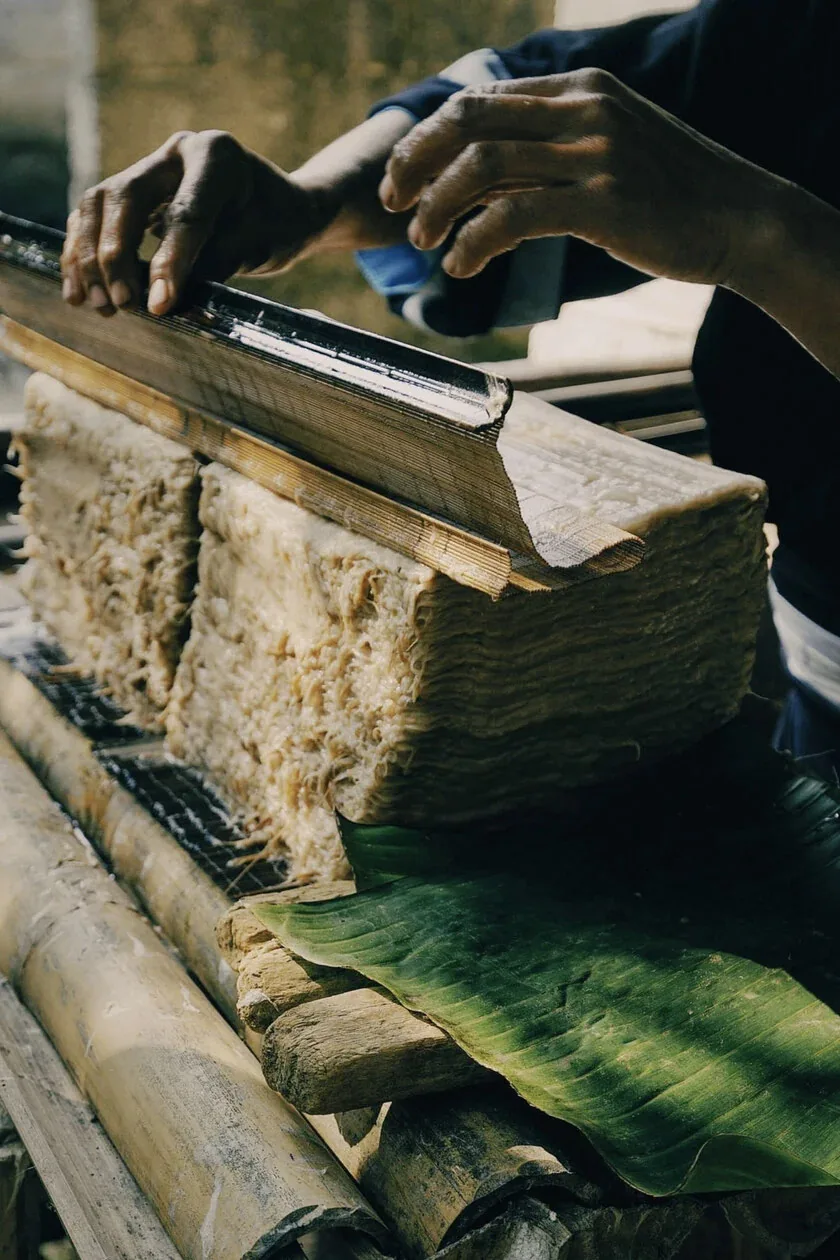
The work calls for strength in preparing the bark and control in forming the sheet. A steady movement helps distribute the fibres. After the sheet has been formed, it is transferred to a surface where it can dry.
Knowledge of these stages has often passed between women in the same family. Mothers and grandmothers have taught younger women through the work itself. Preparing the material and handling the frame are skills learned with the tools in hand.
A finished sheet brings those separate stages together. Its surface begins with the choice and preparation of bark, then takes shape through the movement of water and the frame.
What the Paper Is For
Historically, giấy bản has been used for learning characters, writing books and keeping family genealogies. It also has a place in ceremonies, including New Year observances, weddings and funerals. Some sheets are cut into ritual paper money for worship.
These uses connect the craft to different kinds of knowledge. A page used for writing can keep a record of names, relationships or stories. Paper prepared for a ceremony belongs to an occasion and the practices surrounding it.
The destination of a sheet is therefore part of understanding how it is made. A question about its use can lead from the vat to a family record, a written text or preparations for a particular date in the year. The material carries meaning through what people do with it.
New Uses,
Continuing Work
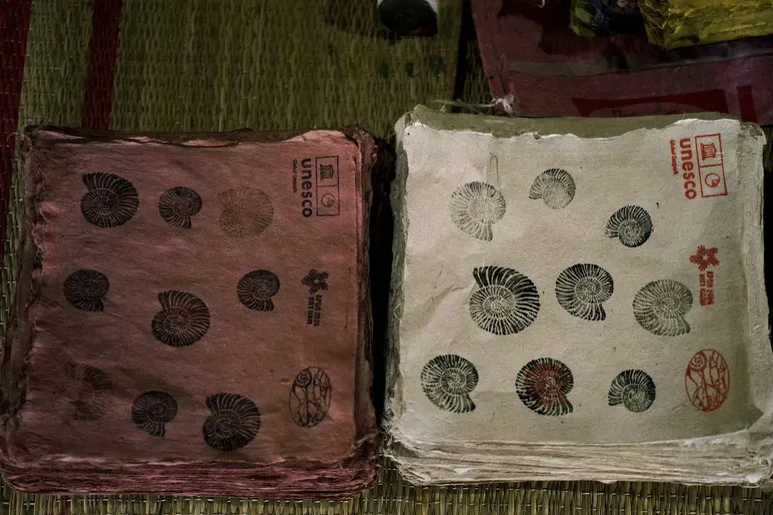
Handmade notebooks, paper for drawing and other products have brought further uses to Dìa Trên’s craft. Work on paper quality and connections with new buyers has become part of the village’s development.
Making something for a new market brings practical choices about the finish, the product and how it will be sold. Those choices affect the people doing the work. Continued demand helps give the technique a place in household livelihoods.
A notebook can carry the craft to someone who has never seen the village. For a visitor who has watched one stage of production, its pages have a more particular origin: bark prepared for pulping, a frame worked through water, a wet sheet set out to dry.
Against the drying wall, the paper is still waiting for its next use.
Photographs: Quỳnh Mai / Travellive