The Pace the Valley Keeps
A September field note from Pu Luong, where ripening rice, smoke from the fields and forest air meet.
The Air Before the View
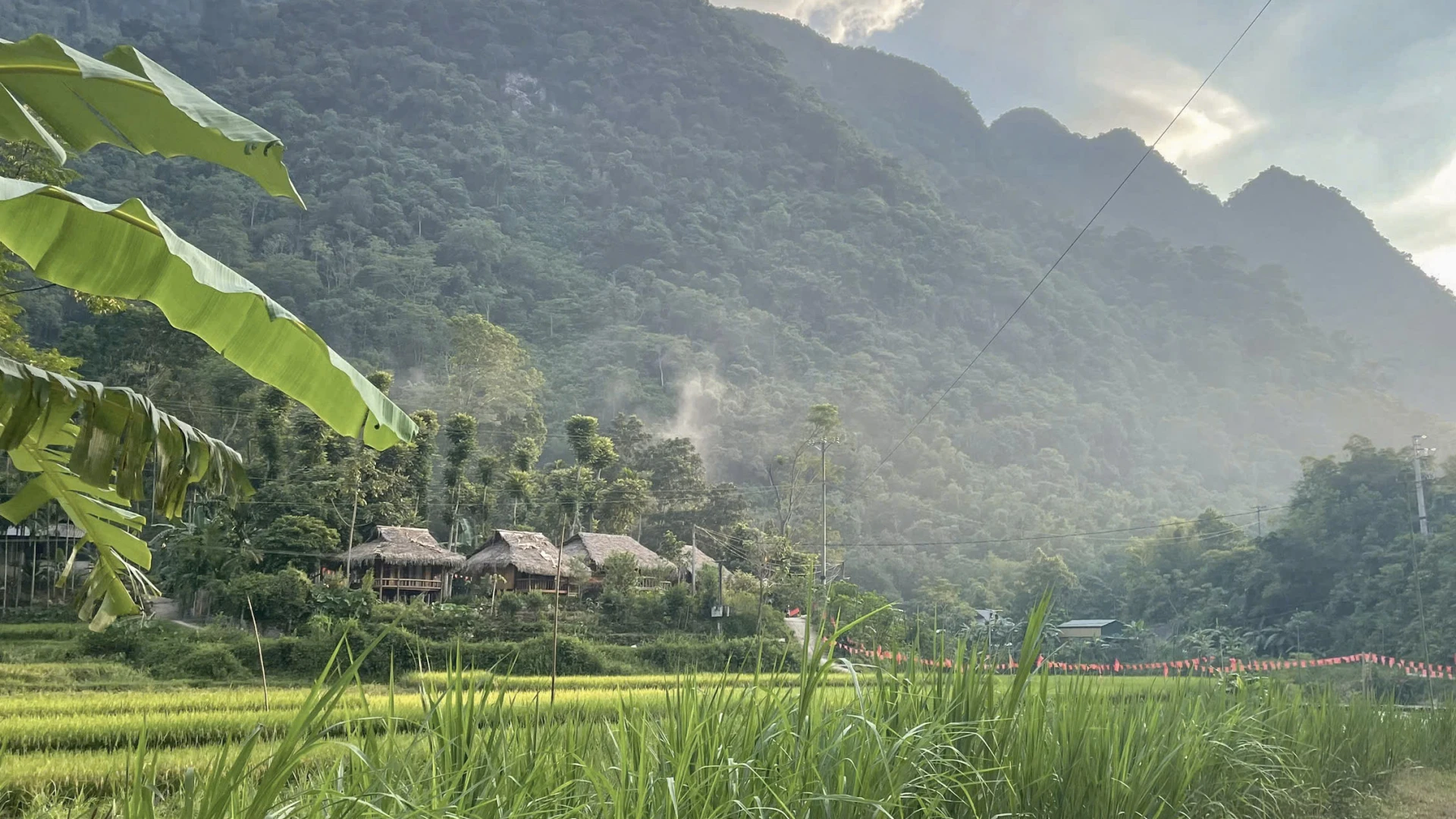
What I remember most from Pu Luong in September is not the landscape. It is the air. The rice was ripening, and somewhere nearby rice straw was burning. Smoke moved across the fields and met the cooler scent of the forest. None of the smells stayed separate for long. Together they formed the clearest memory of the visit, before any photograph or viewpoint.
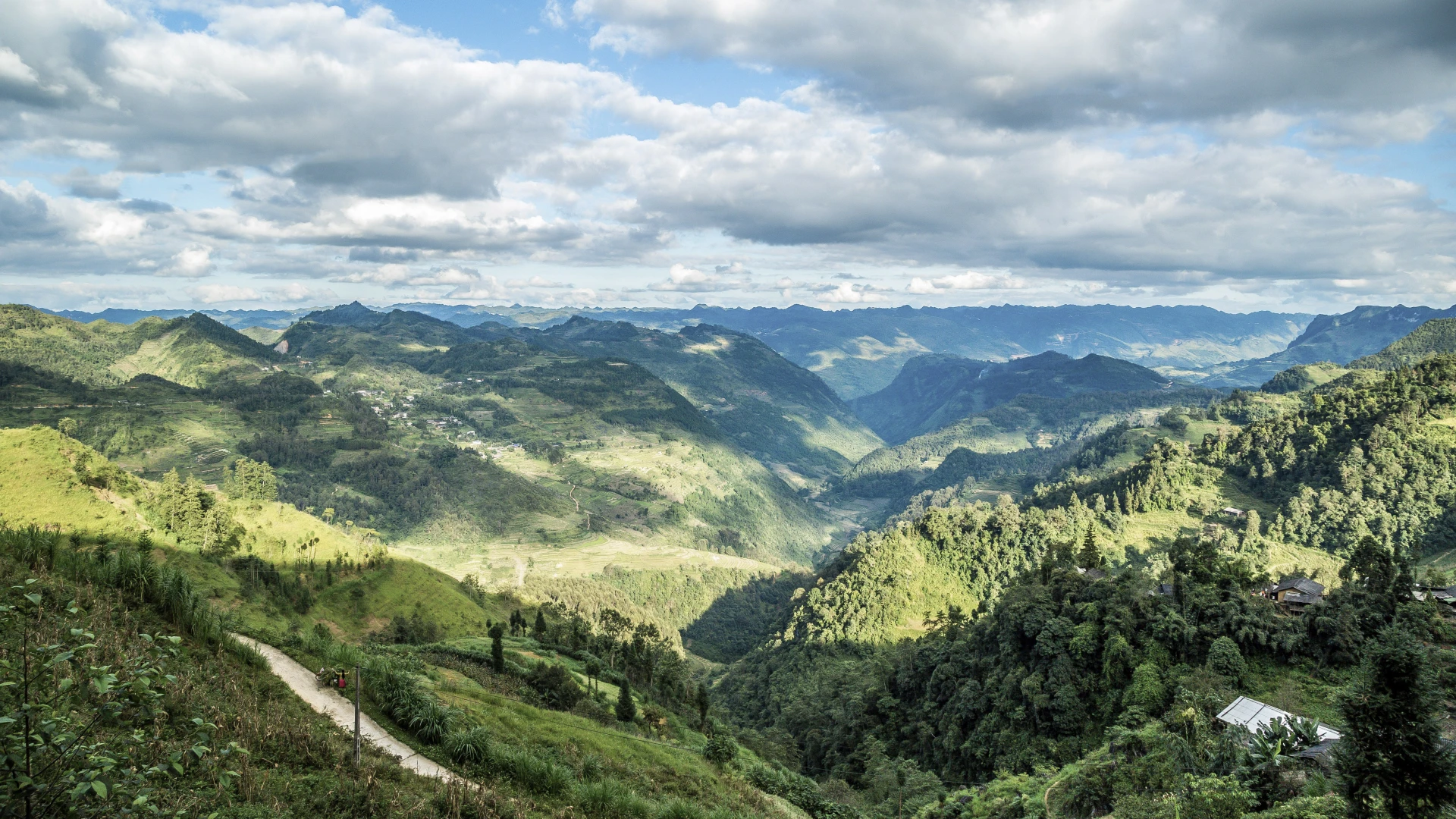
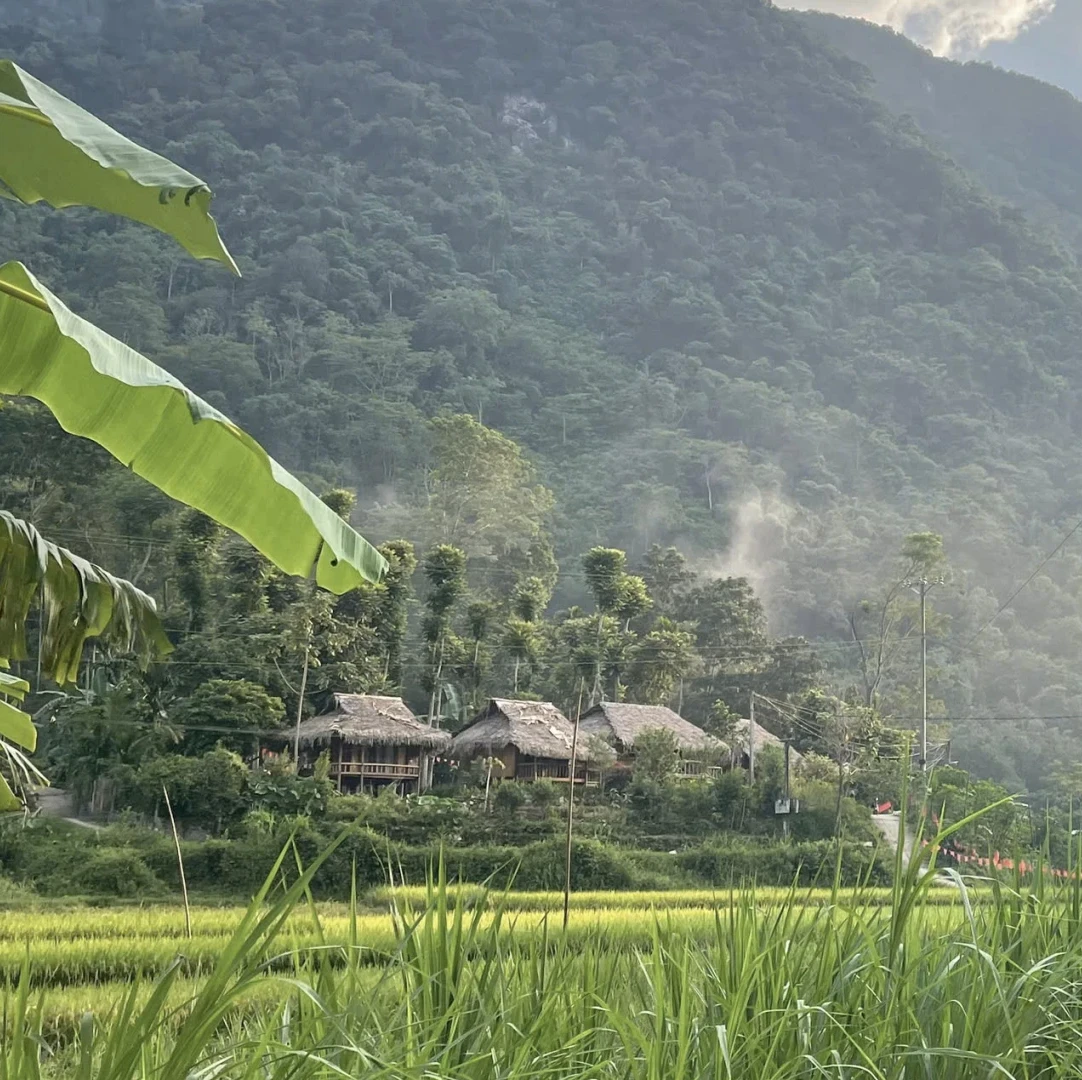
From a distance, the valley can look almost composed: bands of rice, a line of houses and forested mountains rising behind them. At the edge of the fields, it felt less orderly and more alive. Grasses leaned into the narrow road. Water gathered beside it. Smoke thinned, disappeared and returned with the wind. The forest was not simply a backdrop. It felt close enough to shape the air below it.
What held my attention was that none of this seemed arranged for a visitor. The colour of the rice belonged to a particular point in the season. The smoke marked work that had already taken place. The paths between the fields existed for everyday movement, not for a scenic walk. The landscape was beautiful, but beauty did not appear to be its purpose.
A Valley Still at Work
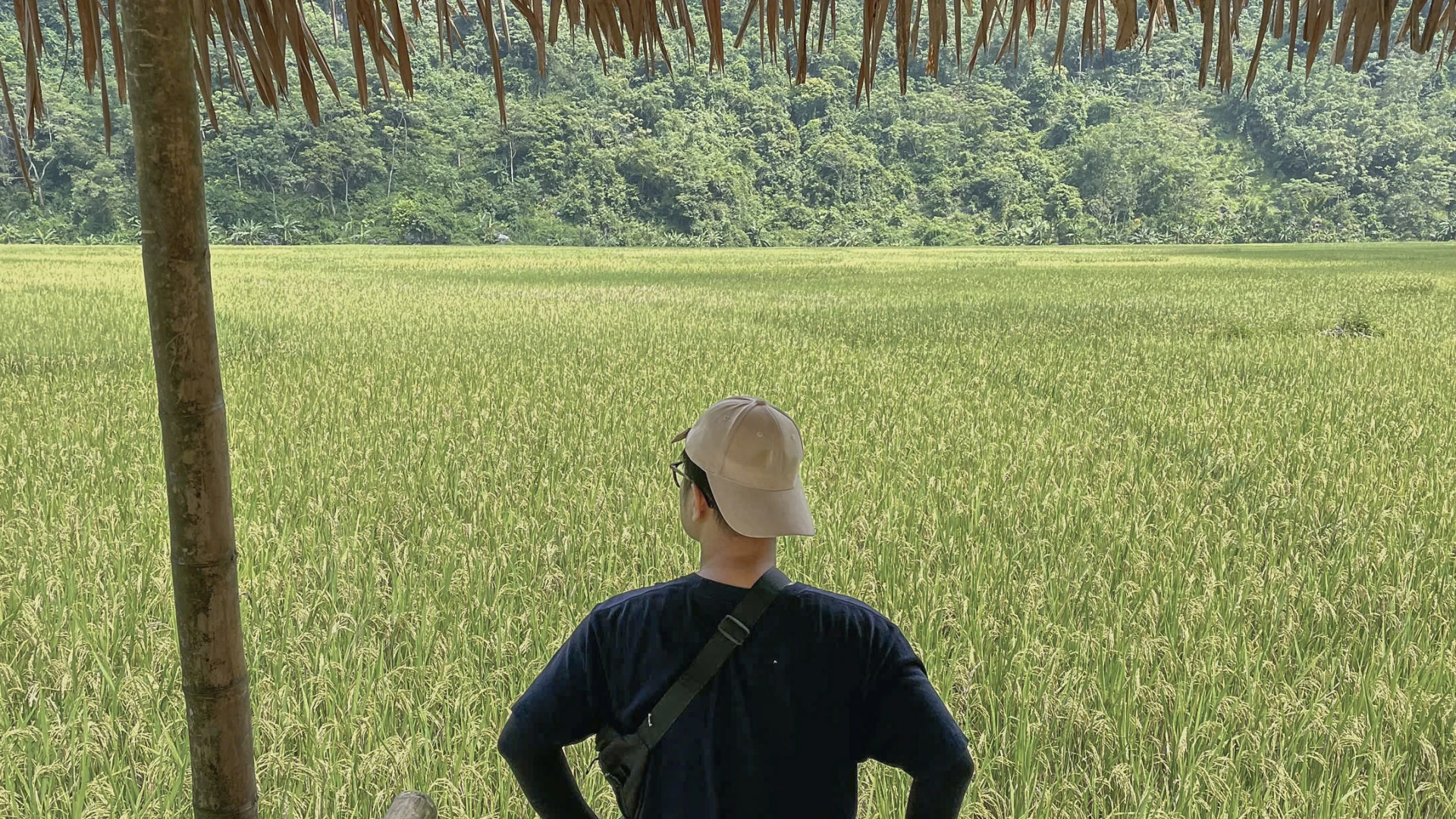
Pu Luong did not feel empty, and it was never completely still. Houses, roads, water channels and cultivated fields made daily life visible, even when no one appeared in the frame. Smoke rose near the foot of the forest. The quiet came from a different rhythm, not from the absence of activity.
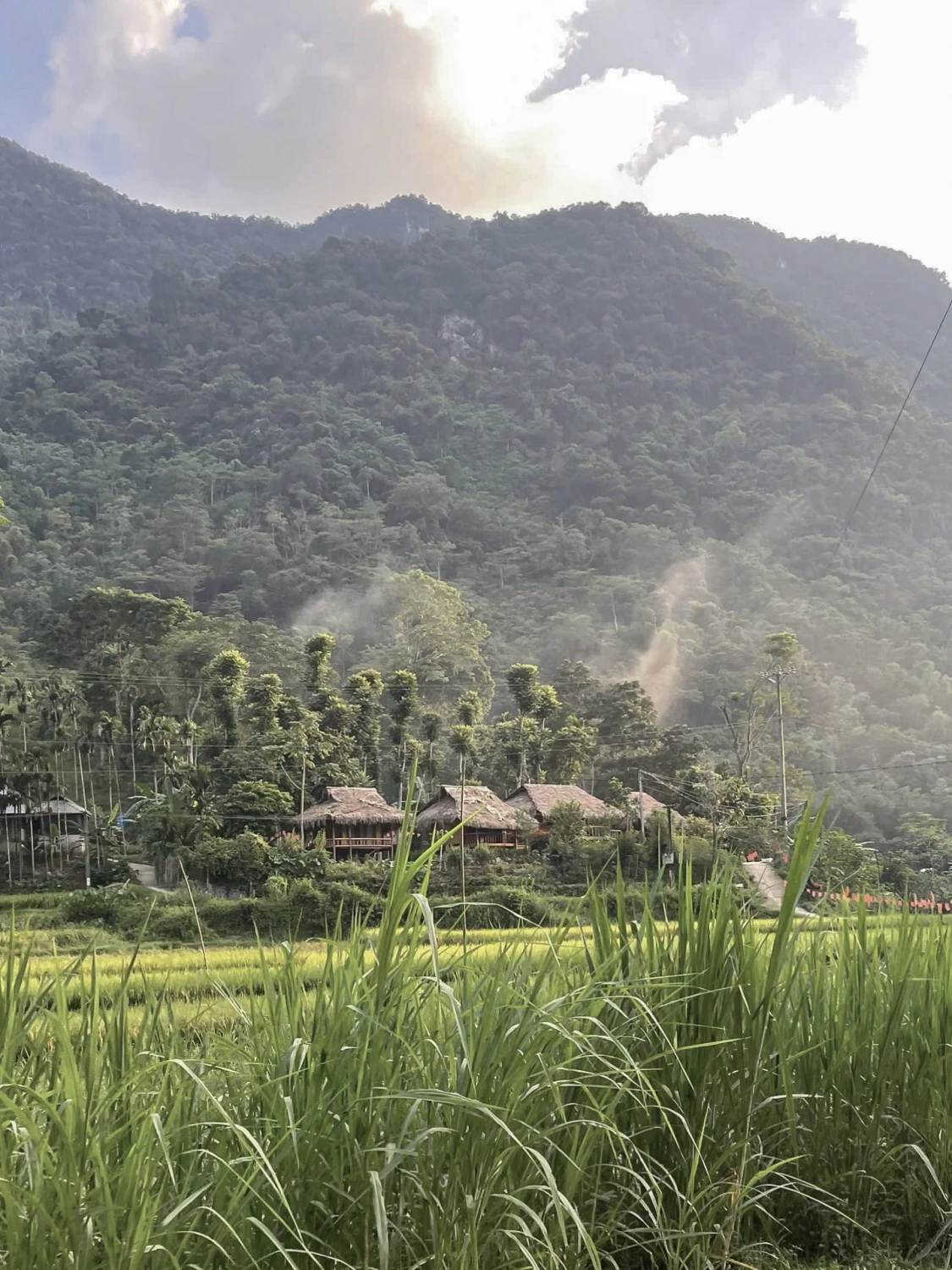
That rhythm gradually changed my own. I stopped thinking about where to go next or what else should fit into the day. A short stretch of road began to take longer because I kept pausing, not for a landmark, but for the way light reached a roof or smoke appeared against the darker trees. By the time I noticed, I was walking more slowly.
There was no dramatic moment when time seemed to stop. The change was smaller than that. I simply became less interested in making the day produce something. The camera became secondary. The hours felt wider because they no longer needed to be divided into a sequence of activities. Moving slowly was not the subject of the visit. It was simply the most natural response to the place.
Letting the Place Set the Pace
It is easy to measure a journey by how much it contains: another village, another viewpoint, another stop before the light changes. In Pu Luong, that kind of accumulation can make the day feel smaller rather than fuller. What stayed with me came from the intervals, when there was no instruction to look and nothing asking the landscape to perform.
That experience changed how I think a journey here should be shaped. A morning does not need to be filled simply because time is available. There should be room to sit before leaving, to stay within one part of the valley and to return before the day has been exhausted. Fewer transitions allow the small changes in light, weather and activity to remain visible. The aim is not to do less for its own sake. It is to avoid interrupting what the place is already giving.
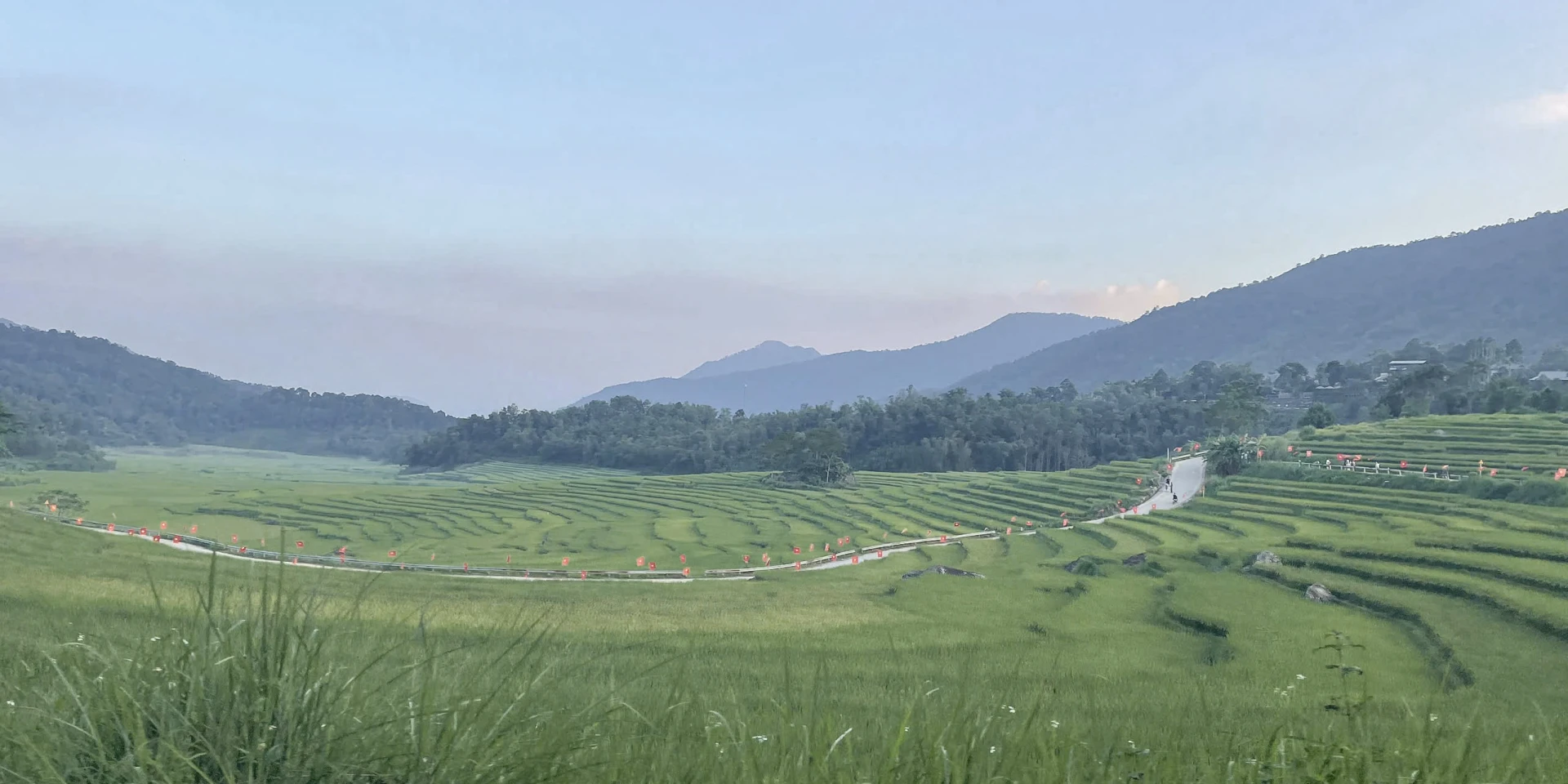
I left Pu Luong without a long list of events, but with a precise memory of how the place felt: rice nearing harvest, straw smoke crossing the fields, the cool scent of the forest and a sense that there was no need to hurry. The valley had not slowed itself for me. Its work and seasons continued at their own pace. I had simply stopped asking it to move faster.